Sharing recipes
Recipes are meant to be shared. That's how cooking knowledge has traveled across generations, from handwritten cards passed between neighbors to cookbooks that cross continents. There's something fundamentally generous about a recipe: here's how I make this thing I love, now you can make it too.
But sharing on the internet is different. A recipe shared online can spread far beyond its intended audience, stripped of context and attribution. We wanted to build a platform where sharing feels natural and joyful, without enabling the kind of careless redistribution that harms creators.
Private by default
Your fork.club library is private. When you import a recipe from a website, save a family recipe, or create something new, it lives in your personal collection. No one else can see it unless you explicitly choose to share.
This isn't just a privacy feature. It's a design decision rooted in how we think about recipe ownership. Most recipes in your library aren't yours to share publicly. That chocolate brownie recipe you imported from BBC Food? It belongs to Mary Berry. The pasta dish from your favorite food blog? Someone developed and tested that recipe, probably many times. Your library is for you: to cook from, to adapt, to learn from.
When sharing makes sense
Some recipes are yours to share:
- Your own original recipes. You developed the technique, tested the proportions, wrote the instructions. It's yours.
- Family recipes you have permission to share. Your grandmother's pie recipe that she'd be proud to see passed on.
- Recipes you've significantly adapted. You took inspiration from somewhere, but the result is meaningfully your own creation.
- Recipes from the public domain. Classic techniques and traditional dishes that belong to culinary heritage, not any individual.
For these recipes, sharing is wonderful. That's how cooking culture grows.
The first-share moment
The first time you make a recipe public, we pause to have a conversation. A dialog appears explaining what sharing means on fork.club:
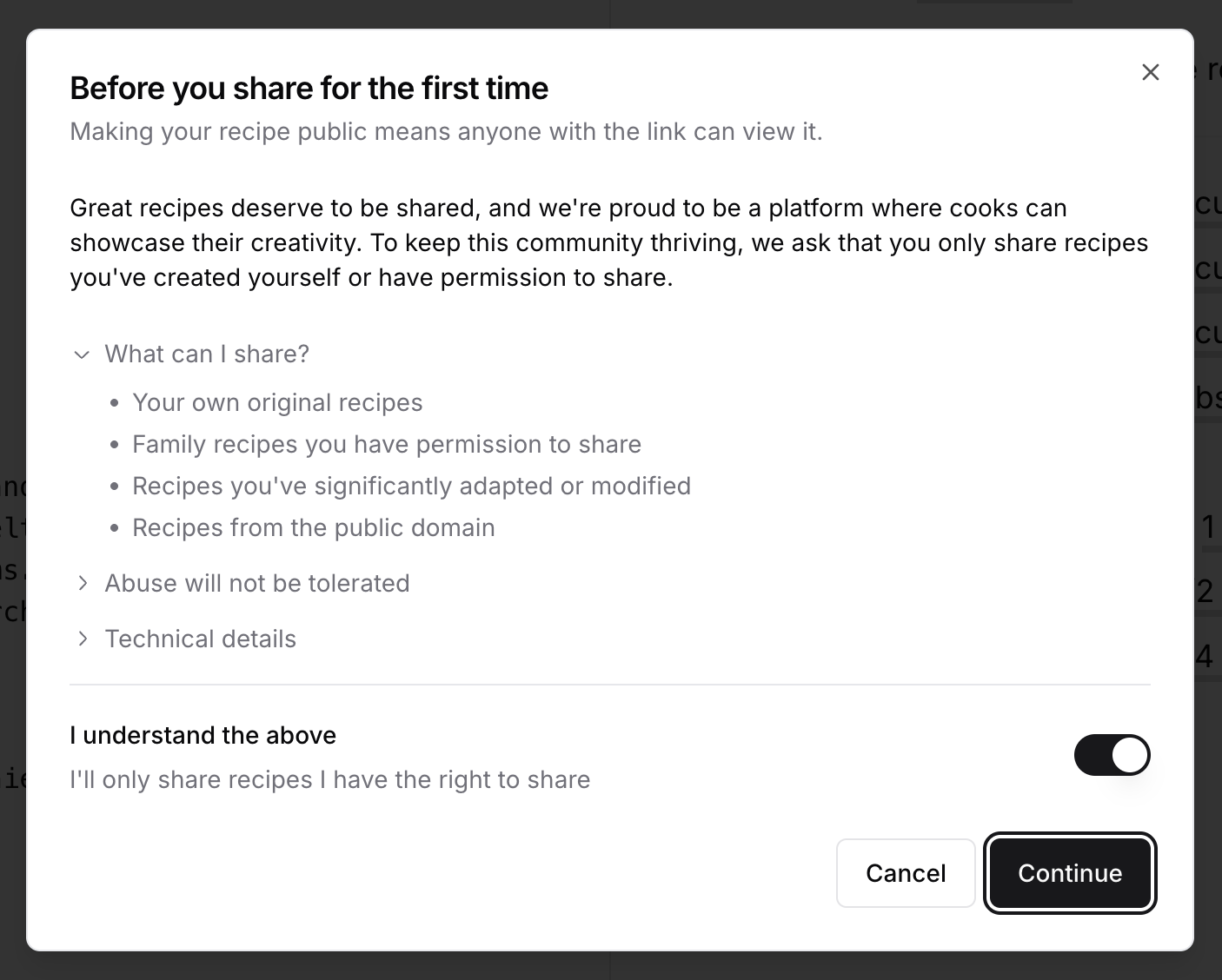
This isn't a legal disclaimer we're trying to bury. It's a genuine moment of reflection. We want people to think about what they're sharing before they share it. Most users, when prompted, make the right choice. They share their original creations and keep imported recipes private.
Designed for sharing, not discovery
Even when a recipe is public, we've made deliberate technical choices about how that sharing works:
No public sitemaps. Your shared recipes won't appear in our sitemap for search engines to discover. The only way someone finds your recipe is if you give them the link.
Noindex by default. We add a meta noindex tag to shared recipes, asking search engines not to index them. If a crawler reaches your page (because you shared the link on social media, for example), we still request they don't add it to their index.
Link-based access. Sharing means sharing a link with people you choose. It's not publishing to a public directory or feed.
The distinction matters. We're enabling you to share a recipe with your friends, your family, your social media followers. We're not building a recipe search engine that competes with the original creators.
Taking abuse seriously
Despite our best efforts, some people will misuse any platform. If that happens, we'll act:
- We reserve the right to remove content that infringes on copyright or violates our Terms of Service.
- If you believe your work has been shared without permission, you can contact us at abuse@fork.club.
- We take all claims seriously and respond promptly.
This isn't boilerplate. We genuinely care about this. Recipe creators, food bloggers, cookbook authors: these are the people who make the cooking internet worth visiting. We don't want to be a platform that harms them.
The balance
Building a recipe platform means navigating a genuine tension. Recipes are cultural knowledge meant to flow freely, but they're also creative works that deserve respect. Traditional dishes belong to everyone, but someone's original creation belongs to them.
We've tried to design for both realities. Import freely for personal use. Share thoughtfully when it's yours to share. Keep attribution visible. Make public sharing an active choice, not a default. Stay out of search indexes.
It's not a perfect solution, but it's an honest attempt to let people share their cooking while respecting the people who create recipes.
Author: Jorge Bastida
Published: January 6, 2026
RFD: #0008
If you'd like to discuss this RFD, share your thoughts, or simply chat about it, feel free to reach out to me - To stay up to date with the project's development, you can follow me on X